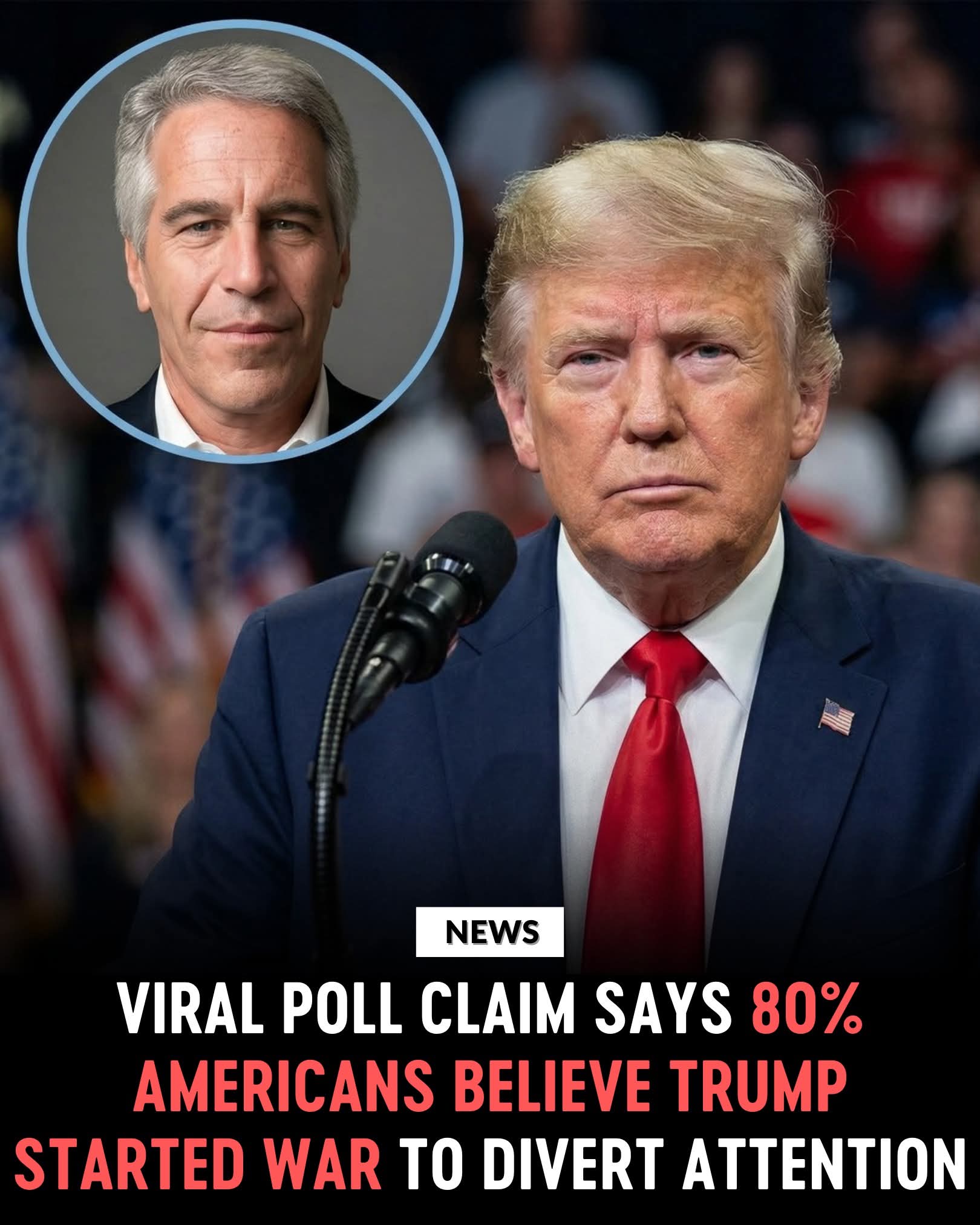
An intense online debate has erupted after a viral claim spread across social media suggesting that 80% of Americans believe former U.S. President Donald Trump started a war to distract from discussions surrounding documents connected to Jeffrey Epstein.
The statistic quickly gained traction on platforms like X (Twitter), Facebook, and TikTok, where thousands of users began sharing posts debating whether political crises are sometimes used to shift public attention away from controversial investigations.
Supporters of the claim argue that the timing of recent geopolitical tensions and renewed focus on records tied to Epstein has raised serious questions about political strategy and media coverage. Critics, however, say the narrative is based more on speculation than verified evidence.
Media analysts and fact-checking organizations have pointed out a major issue: the origin of the “80% poll” remains unclear. No widely recognized polling institutions—such as Gallup or Pew Research Center—have published a survey with those results.
Because of that, experts warn the statistic may be an example of how unverified data can rapidly influence online conversations. In today’s digital environment, a single graphic or anonymous poll can circulate millions of times before its accuracy is questioned.
Communication researchers say the episode highlights a broader trend: social media can amplify politically charged narratives faster than traditional verification processes can keep up. Once a claim goes viral, it often shapes public perception—even if the original source is uncertain.
As debate continues online, analysts are urging users to verify statistics and check credible polling sources before sharing claims that could further intensify political polarization.
For now, the viral claim remains unverified, but the discussion it sparked demonstrates how quickly politics, perception, and social media influence can collide in the digital age. 

